Catch a Human Progression and Cash Economy
Turn clean catch loops into upgrades without burning cash on dead ends.
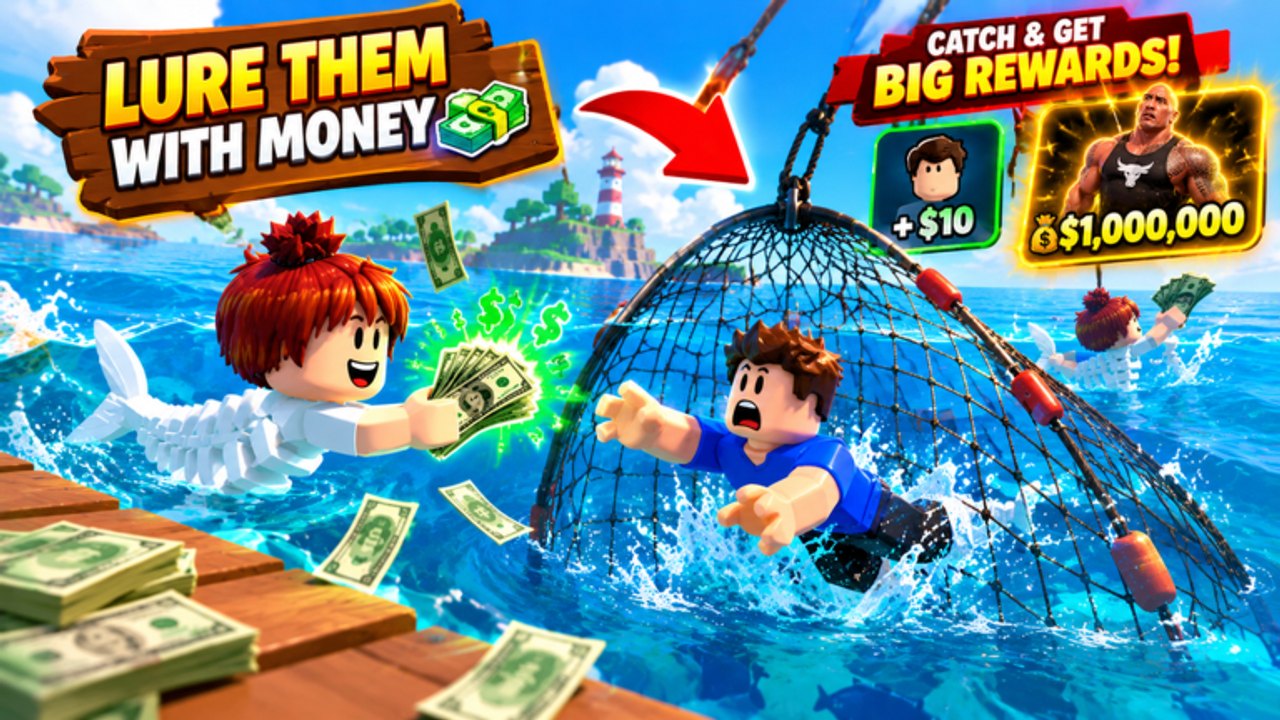
Progression is a loop multiplier, not a level grind
Catch a Human is a Roblox simulation/tycoon from Lost Universe Studio. You do not climb a giant XP ladder so much as you compound successful water returns into better bait, better nets, and safer routes. Cash arrives when you leave the water, lure humans, net them, dodge guards, and bank the catch. Failed inland tourism spends time and often spends tools without a payout. This page is the economy brain that sits beside the mechanical guides.
Read Getting Started and Bait and Nets alongside this guide. Strategy grades live on the Bait Tier List and Human Rarity pages. Map tiles that protect your cash/hour live on Map and Routes.
Where cash actually comes from
Cash is the reward for completed returns, not for placing bait. That sounds obvious until you watch a session where someone dumps expensive lures into a police lane and never touches water. Unit economics for a healthy run:
- Bait cost (or durability spend)
- Time on land
- Risk of guard interruption
- Payout when the catch hits water
If step 4 does not reliably beat steps 1–3, you are losing even when the net animation looks cool. Commons on short shoreline routes usually win early because the denominator (time + risk) stays small.
Early game (first clean hour)
Goals:
- Complete ten short common returns on wet sand
- Buy the first reliability upgrade that fixes your real bottleneck (missed nets vs ignored bait)
- Ignore cosmetics and speculative “ultimate” shop rows
Spend rule: fix the failure you see most often. If humans walk past your lure, bait quality is the bottleneck. If humans stop but your swing whiffs, net timing or net range is the bottleneck. The Bait and Nets guide expands that decision; this page just insists you measure before you buy.
Mid game (stable conversion)
Once commons feel boring:
- Keep one S-tier shoreline loop as your cash engine (Map and Routes Template S)
- Unlock one mid-land spike route for variety (Template M)
- Start tracking cash per ten minutes, not vibes
Mid-game traps:
- Buying every bait “just to try”
- Chasing rare humans every life because a short went viral
- Spending the bankroll the moment a patch drops without re-checking prices
Late November 2026 showed how fast attention spikes (24–25 November CCU jumps, experience updated again around 27 November). Prices and restock cadence can move. Re-open the shop after patches and rewrite your plan if numbers changed — see November 2026.
Late game (intentional rarity)
Late game is permission to take risk on purpose, not permission to abandon fundamentals.
- Fund rare attempts with shoreline commons
- Cap specialty hunts per session (example: one rare attempt per three common banks)
- Abort early when guards spoil the pocket (Stealth and Guards)
- Never mortgage your next hour of bait money on a single inland greed swing
Human rarity rankings help you choose targets; they do not print cash by themselves.
Session goals you can copy
20-minute warm-up
Five common returns, no shop browsing, no rare hunts. Purpose: relearn patrols and net cadence.
45-minute economy block
Twelve to fifteen commons on two anchors, then one planned mid-land spike if cash/hour is healthy. Buy at most one upgrade at the end.
Patch-week session
Five-minute empty scout, three commons, shop price check, then decide whether tonight is a grind night or a remapping night. Do not force rare hunts while the map is unfamiliar.
Codes, gamepasses, and scripts
- Codes: Still no verified active strings as of late November 2026 (Codes Hub). Nice when they appear; never required for progression.
- Gamepasses / Robux: Optional convenience. They do not replace route skill. If you buy, buy reliability that matches your bottleneck, not cosmetics first.
- Scripts / auto-farm: Ban and malware risk. They are not a progression strategy — read Scripts Hub.
Tracking sheet (keep it simple)
After each session write four numbers:
- Successful water returns
- Failed or aborted land trips
- Cash gained (approximate)
- Upgrades purchased
If failures rise while cash stays flat, your map or stealth plan broke — fix routes before buying more bait. If returns are high but cash feels low, re-check target choice and shop prices after the latest update.
Economy myths to ignore
- “One rare catch equals an hour of commons” — only if you actually bank it; wipes erase the fantasy math.
- “Newest bait is always best” — newest can be a prestige sink.
- “Busy servers mean more humans for me” — busy 6-player lobbies often mean contested tiles and accidental aggro.
- “Executors print cash safely” — they print risk.
Related pages
Progression in Catch a Human is honest: bank more clean loops than you burn on greed, upgrade the real bottleneck, and re-price the plan after every noisy patch week.
Frequently Asked Questions
Quick answers for Catch a Human players.
What should I buy first with cash?
Whatever fixes your most common failure — ignored bait or missed nets — before cosmetics.
Do I need codes to progress?
No. As of late November 2026 no verified active codes exist. Clean water returns are the real economy.
When should I hunt rare humans?
After commons fund your upgrades and you can abort cleanly. Cap specialty attempts per session.
How do patches affect cash plans?
Shop prices, restock, and guard paths can move. Re-check the shop and re-scout routes after updates.
Are scripts a valid progression shortcut?
No. They risk bans and malware. Use guides, routes, and smarter upgrades instead.